What is Daemo?
Daemo is a Deterministic Runtime for AI Agents. It turns natural language intent into safe, verifiable execution.
It is not a generic chatbot. It is an Intent-to-Execution Bridge that sits as a governance layer between an LLM and your mission-critical application code.
AI is easy. Safe AI is hard.
Connecting LLMs directly to a database (NL-to-SQL) is a security nightmare. It bypasses business logic, ignores application-layer permissions, and is prone to hallucinated queries that can corrupt or expose data.
The challenge is not just to connect AI seamlessly, but to do so with the safety and control of your existing application layer.
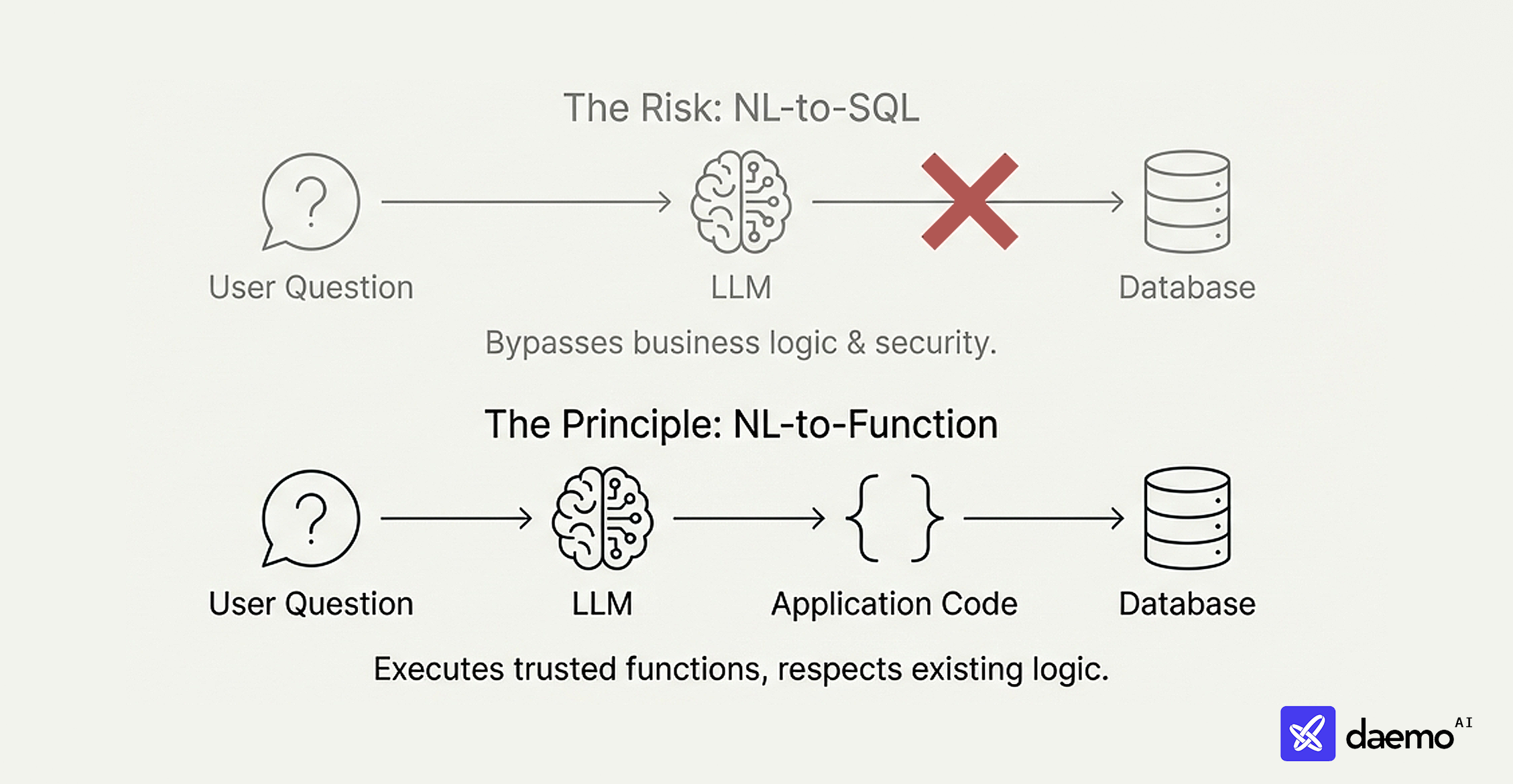
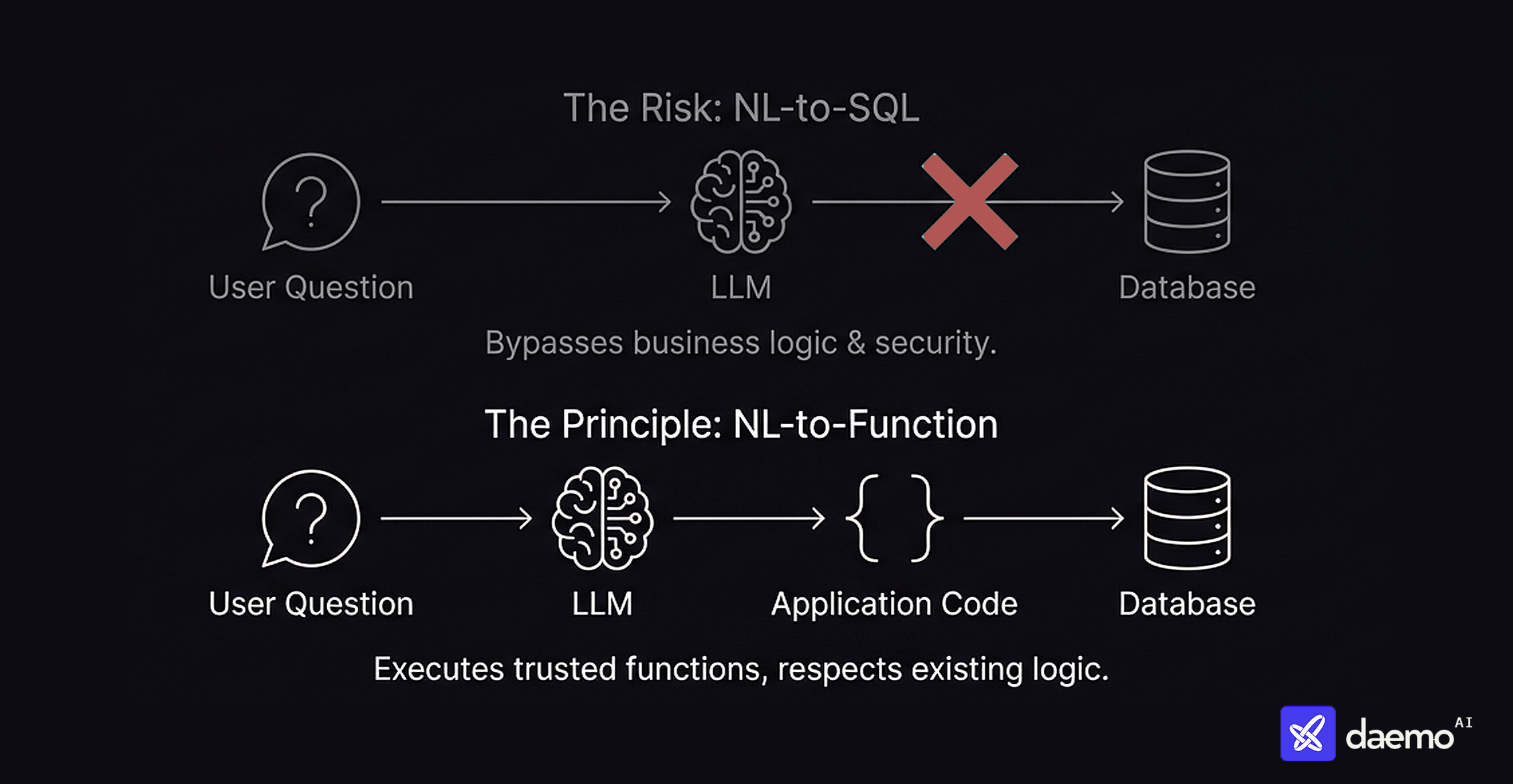
The Secure Topology
Daemo operates on a "Bring Your Own Code" model. Instead of uploading your business logic to a cloud, Daemo connects to where your code already lives.
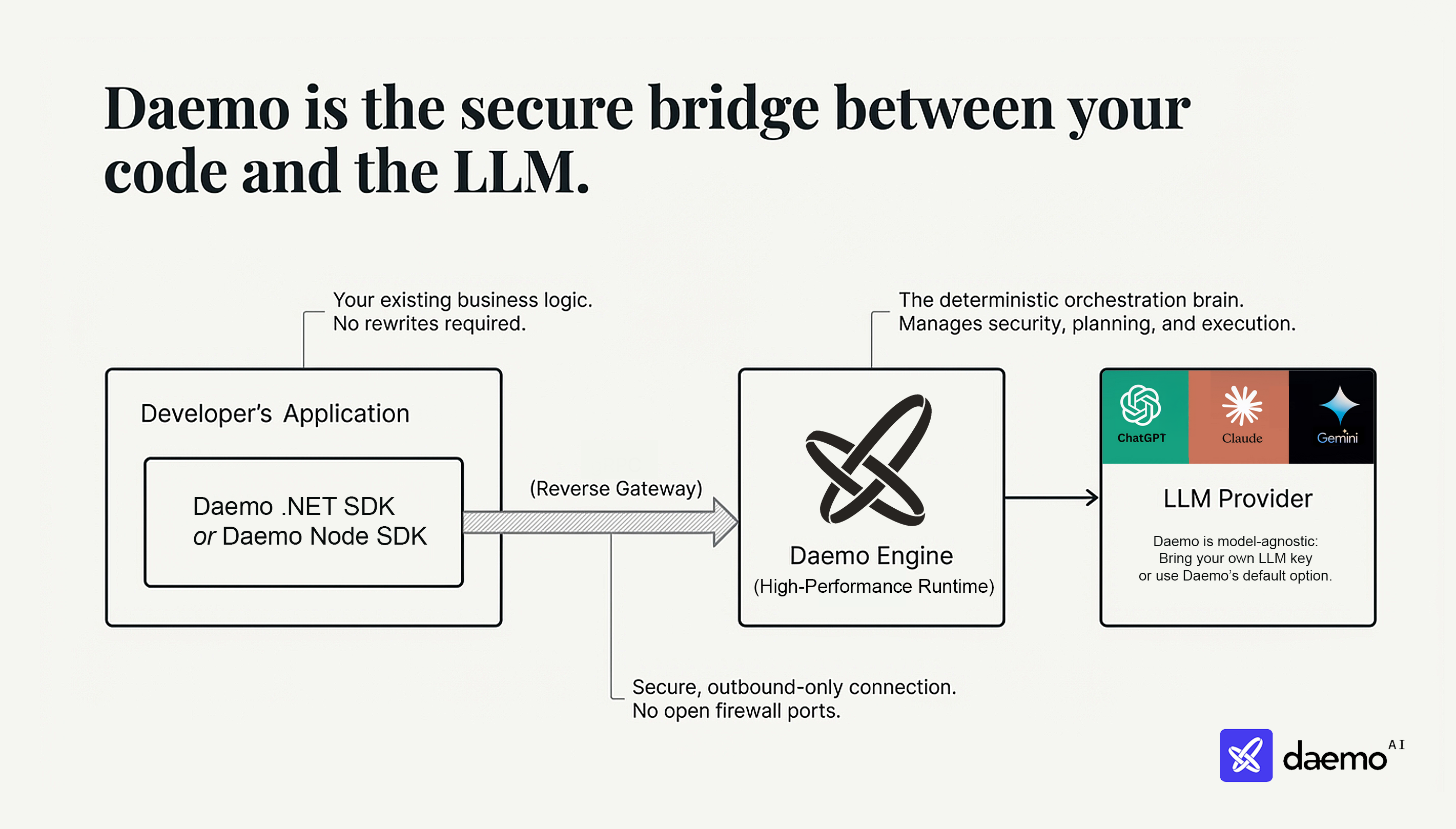
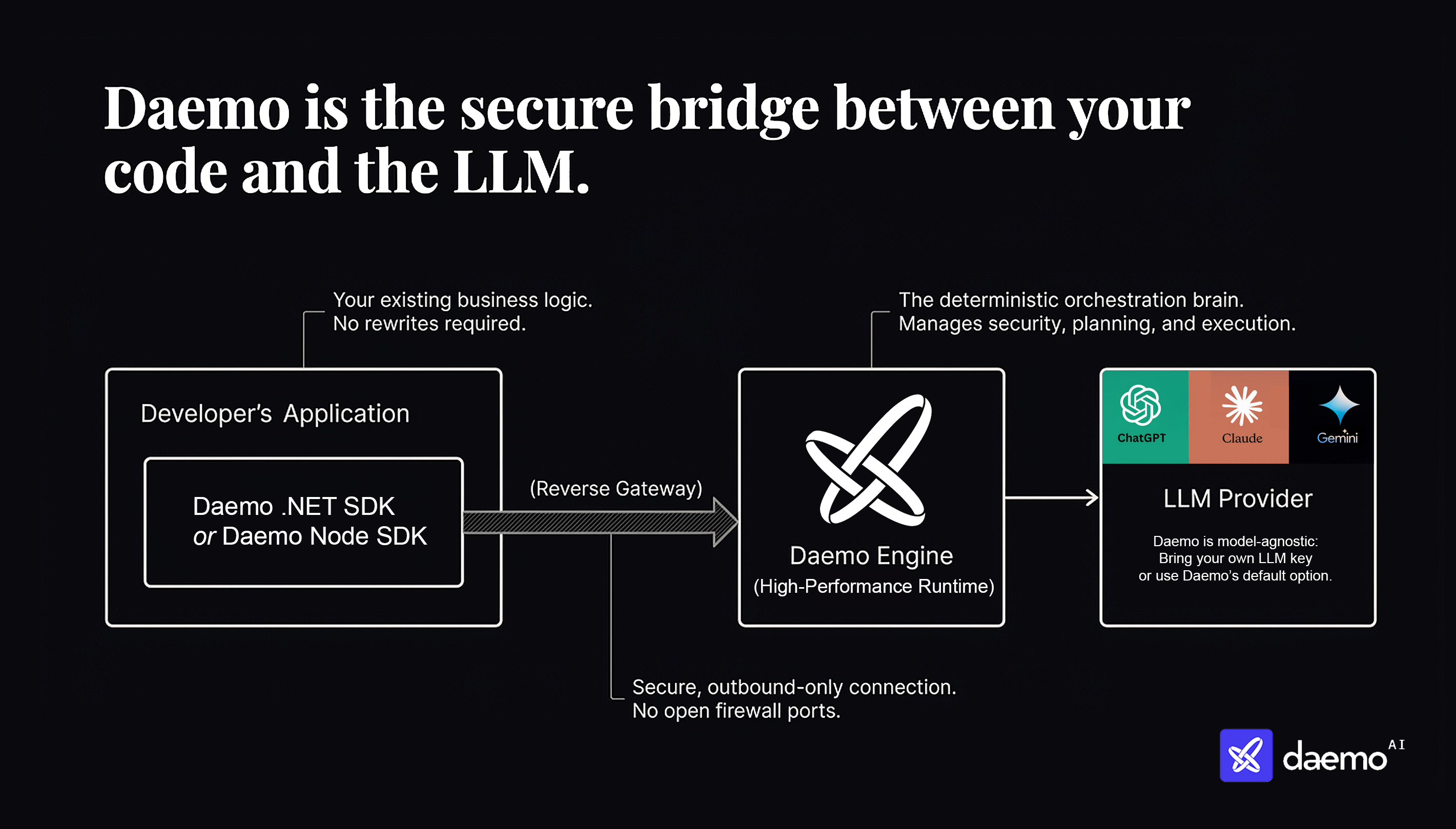
Key Architecture Components
-
Your Application (The Host):
- Native Integration: Daemo drops into your existing .NET or Node.js app as a standard SDK dependency.
- Local Execution: Logic runs inside your existing infrastructure, meaning it inherits your existing database connections, VPC security groups, and IAM roles naturally.
-
The Connectivity (The Secure Tunnel):
- Outbound-Only Topology: The SDK establishes an encrypted, persistent control plane to the Daemo Engine.
- Zero-Config Firewall: Because the connection is outbound-only, you do not need to open inbound firewall ports, configure port forwarding, or expose public IPs. It works seamlessly from
localhostor deep inside a private corporate VPC.
-
Daemo Engine (The Governance Layer):
- Deterministic Kernel: A high-performance native runtime designed for orchestration speed and type safety.
- Transaction Management: It manages the conversation state and enforces "Two-Phase Reasoning" to prevent race conditions.
- The Airlock: It acts as a sandboxed decision engine, validating all execution plans against your governance policies before authorizing the local SDK to act.
Why not just use MCP?
MCP (Model Context Protocol) is an excellent standard for connectivity (the "Cable"), but it lacks the transactional safety required for enterprise action.
Daemo acts as the Transactional Orchestrator on top of standard tool-calling protocols. We ensure that when an Agent tries to "Update a Record," it follows strict business rules, rollback patterns, and approval gates that raw MCP connections do not enforce.
Deep Dive: The Transactional Layer
Understanding why Enterprise Agents need an Orchestrator, not just a Pipe.